TIR attends meeting of CITES Standing Committee in Geneva
December 15, 2017
CITES (Convention on International Trade in Endangered Species of Wild Fauna and Flora) is an international trade agreement aimed at controlling cross-border trade in endangered plant and animal species and preventing their over-exploitation. It was signed in Washington in 1973 and ratified by Switzerland – as one of the first member states ¬– in 1975. Also, the original document is deposited in Switzerland and the CITES Secretariat is located in Geneva. To date, 183 countries have signed the agreement, which protects a total of around 5,800 animal species and 30,000 plant species. The latter are grouped into three categories according to their vulnerability (Annexes I-III). Depending on their classification, the international trade in these species is either prohibited or subject to authorization.
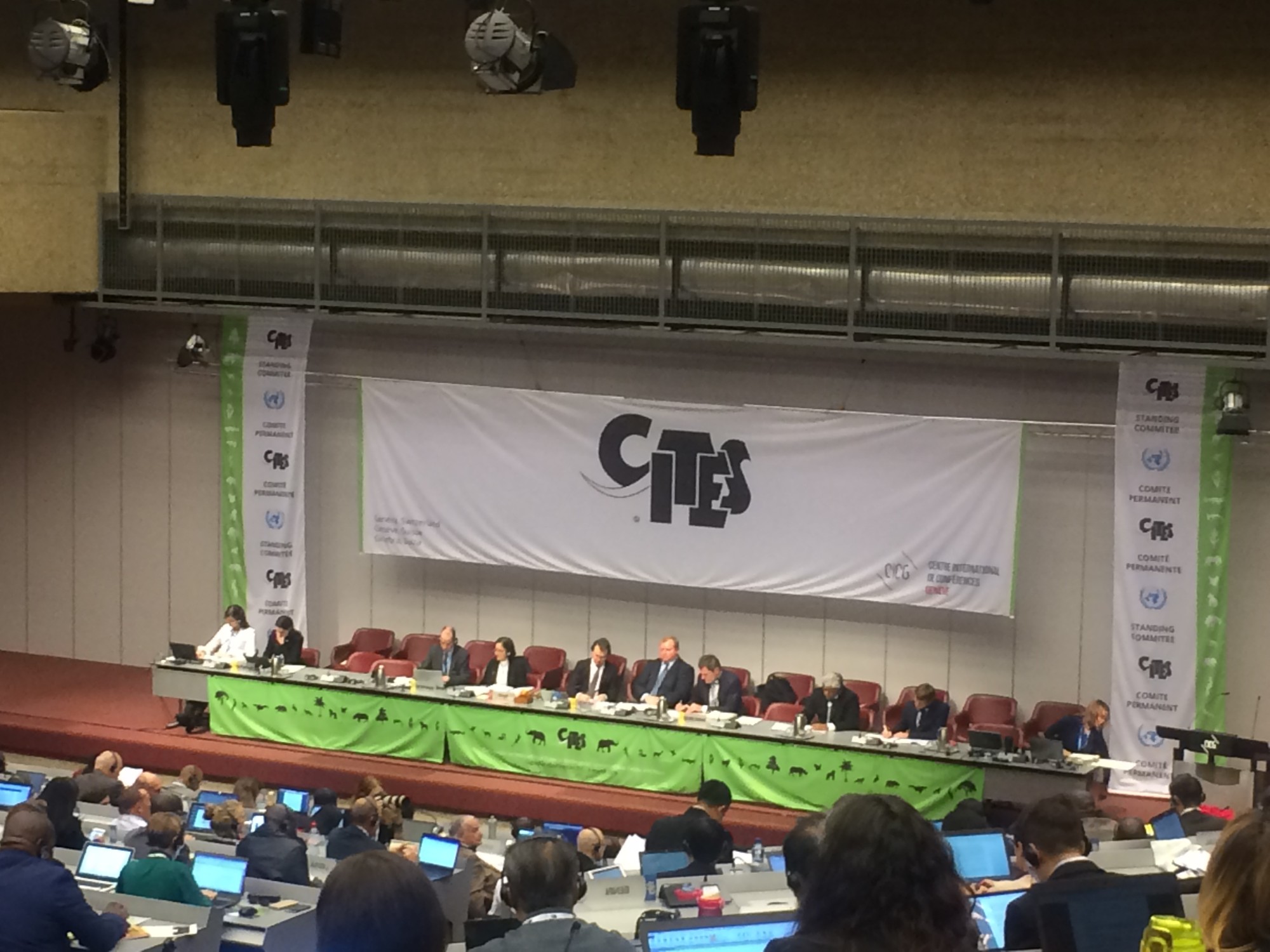
The 69th meeting of the Standing Committee focused on compliance and enforcement issues, the trade in ivory and pangolins as well as Japan's trade in strictly protected sei whales, among many other things. The entire conference program can be viewed here. The Standing Committee provides the CITES Secretariat with guidelines for the implementation of the Convention and monitors its development and realization within the Secretariat's budget. Switzerland has announced an additional one million Swiss francs per year in support of CITES.
The Standing Committee discussed a number of issues aimed at curbing the ivory trade, including the closure of national ivory markets. Legal markets ultimately enable the smuggling and trading of illegal ivory. The number of animals killed for their tusks has increased dramatically in recent years. Japan was criticized at the conference for its commercial trade in strictly protected sei whales. The country catches these animals on the high seas, outside its national territory, which is why the import of these animals to Japan qualifies as international trade according to the CITES regulations.
Despite the fact that this should result in trade sanctions against Japan, the member states have so far refrained from doing so and have decided that there is a need for "more information on the subject". The discussion surrounding the fate of pangolins focused on the treatment of specimens, including stockpiles, from the time prior to their listing in Annex I. The Standing Committee agreed by majority vote that, pending further discussion by the next conference of the member states, all pangolin species shall be treated as Annex I species, regardless of the date of their acquisition.
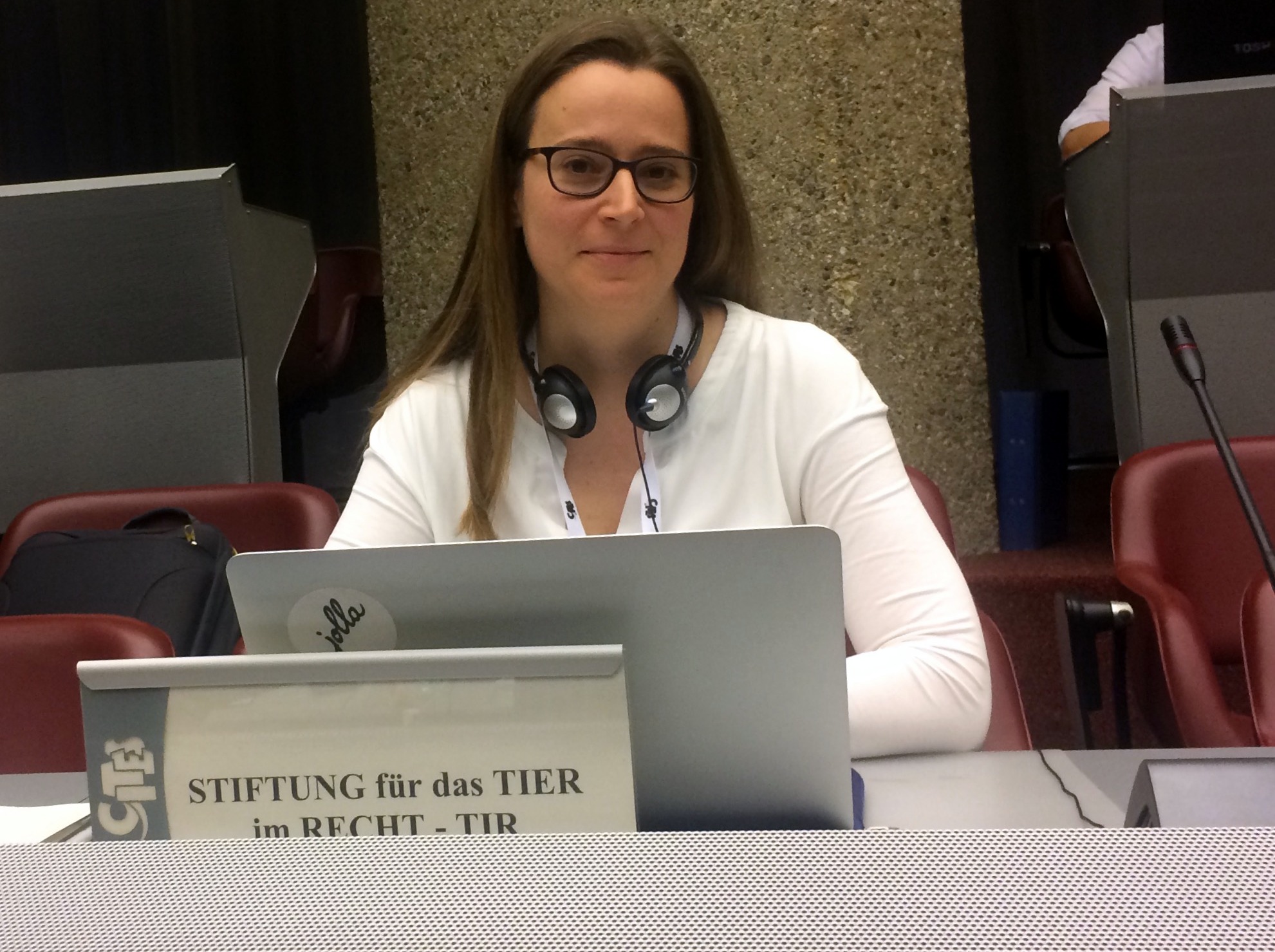
TIR has been dealing with the issues of poaching and trade in live animals, hunting trophies and illegally purchased animal products such as ivory and rhino horn since 2015. Tackling the immense animal welfare and species conservation problem requires not only legal know-how but also good networking and a constant exchange of information. This is TIR's second time at the Standing Committee meeting as an observer (see TIR News Release of January 21, 2016) and it intends to continue following the work of the CITES bodies closely. With the help of CITES, the worldwide trade in endangered species and products thereof can be reduced significantly. However, this can only be achieved if the CITES provisions are applied and enforced effectively, which is oftentimes not the case. Also, it is important to keep in mind that the agreement does not address animal welfare issues. The individual member states are solely responsible for adopting national animal welfare laws and in many countries such regulations simply do not exist.