TIR excited about the opening of the Cambridge Centre for Animal Rights Law
The Centre for Animal Rights Law was inaugurated in Cambridge with an opening conference on "Animal Rights Law: Present and Future". Leading animal rights experts from around the world discussed new approaches to the question of how and to what extent animals should be granted rights in the future. The Stiftung für das Tier im Recht (TIR) was also represented at the event.
May 6, 2019
On April 26, 2019, the Cambridge Centre for Animal Rights Law was inaugurated with a launch event at the Cambridge Faculty of Law. The institute sees itself as an independent academic competence center that will focus on researching and promoting fundamental rights of non-human animals. While animal welfare law has advanced significantly throughout the world in recent decades and has increasingly established itself as a legal discipline in its own right, the question of whether animals should be granted actual rights has not yet been comprehensively researched on a legal level. The animal rights concept as such has existed for many years, but for various reasons it has only been given little consideration in legal doctrine. The greatest challenge is to reconcile the concept of animal rights with the legal principle that animals can be human property. For this reason, there has been relatively little legal work to date on the understanding and promotion of animal rights and on the questions as to how such rights should be given concrete form and how the social and economic consequences should be dealt with.
The Cambridge Centre for Animal Rights Law is UK's first academic institution dedicated to the systematic research and teaching of as well as policy work surrounding fundamental rights of non-human animals. The aim of the institute, which was founded and is run by Director Dr. Sean Butler and Executive Director Raffael Fasel, is to research, develop, and publish on key issues in the field of animal rights on an international level over the coming years. In order to raise legal awareness for the importance of animal rights, the institute will be offering specific courses on animal rights law for students as well as lectures for individuals that are not necessarily familiar with law and are coming from other subject areas. Also, the institute is planning on organizing further conferences and workshops for lawyers and others interested in the topic.
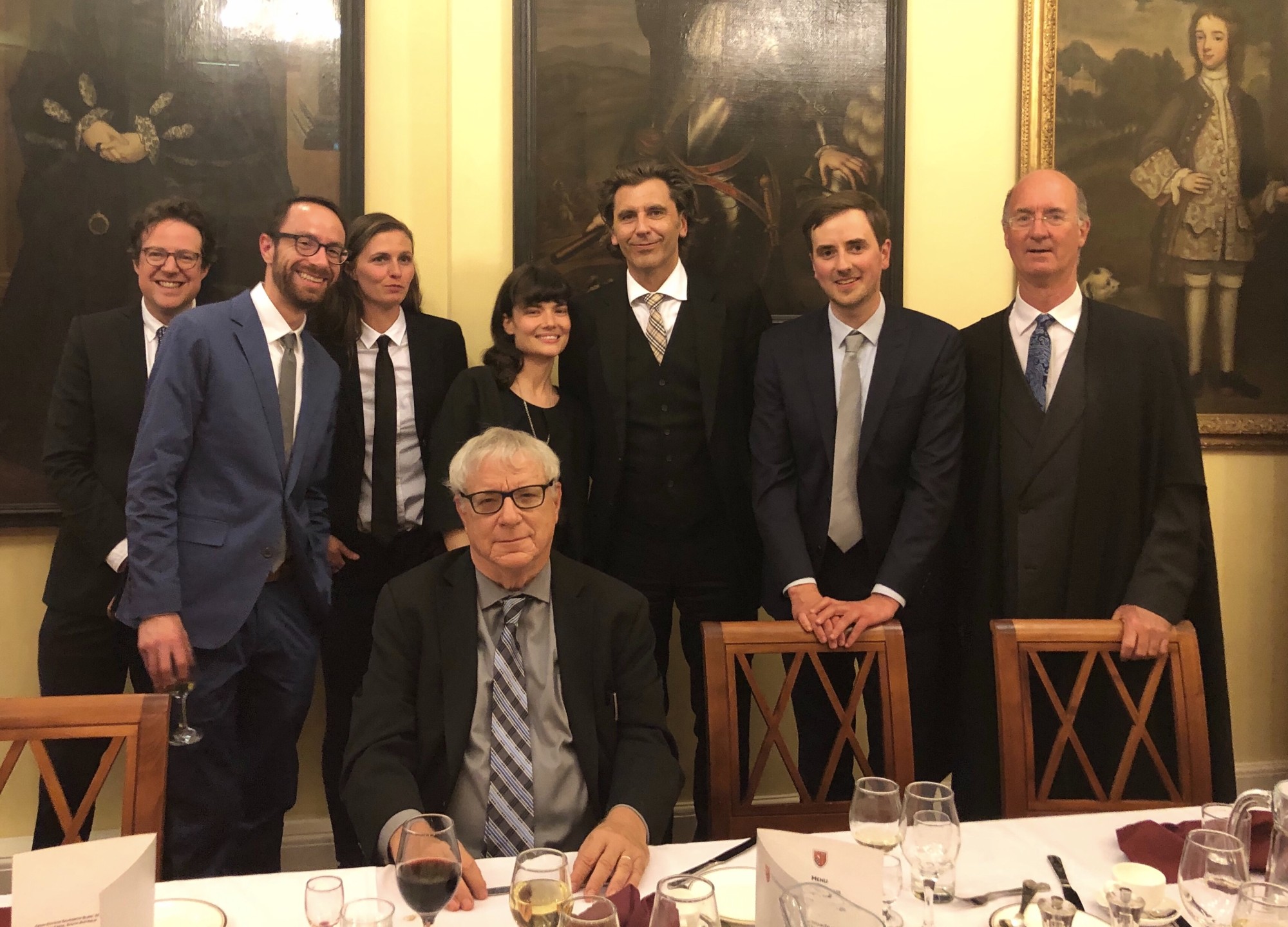
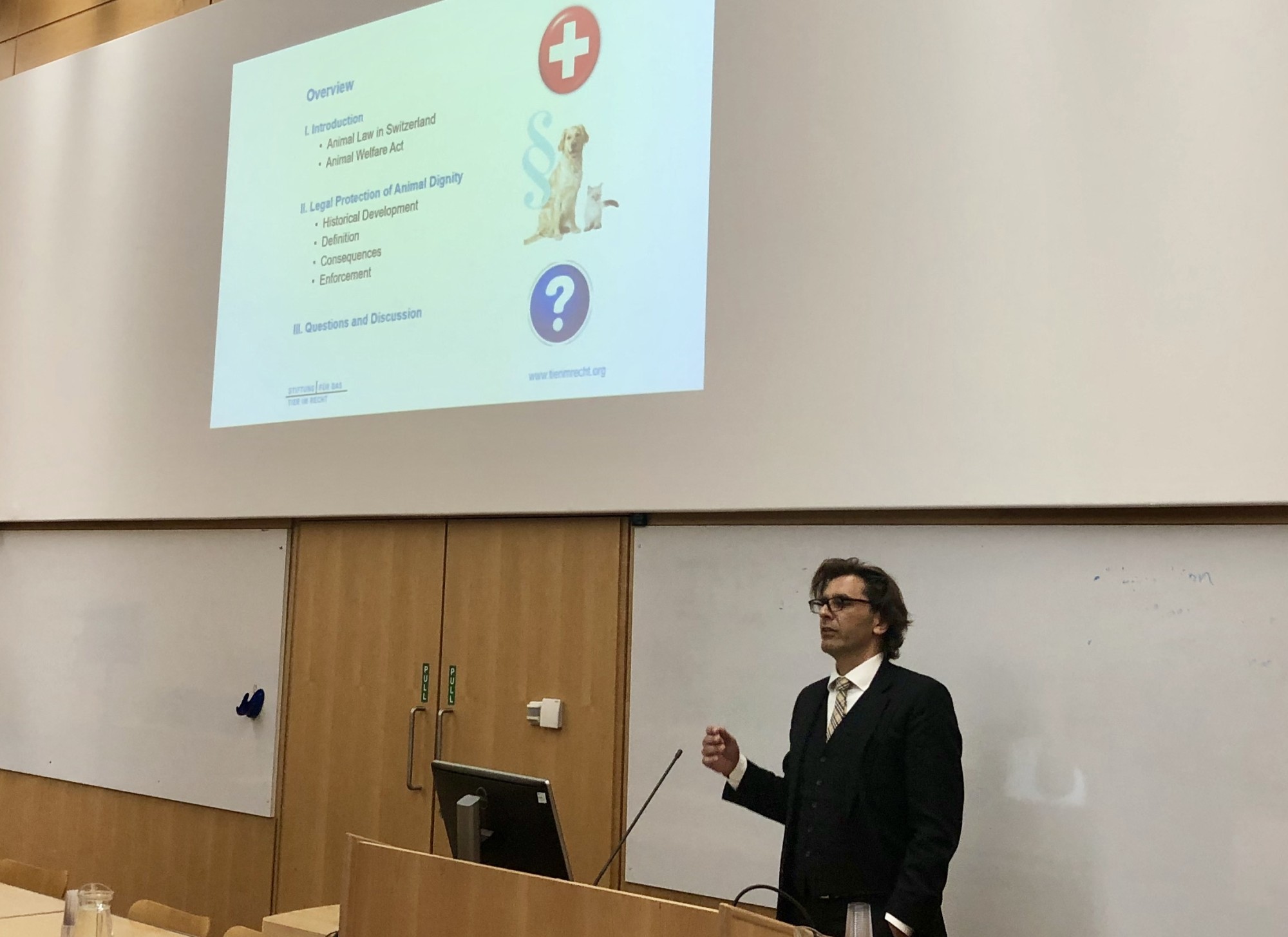
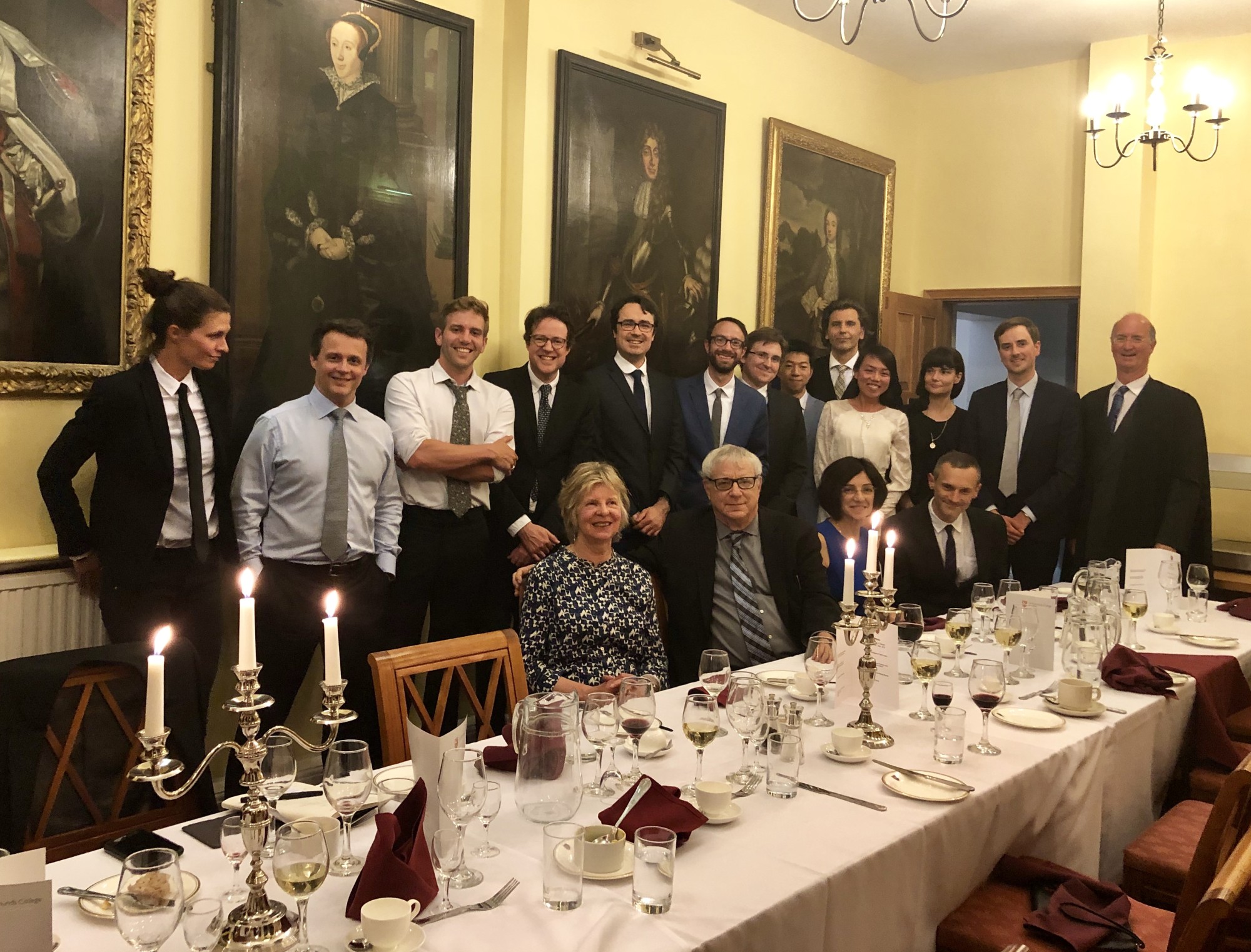
The title of the opening event at Cambridge University was "Animal Rights Law: Present and Future". After an introduction by Dr. Sean Butler and Raffael Fasel, Dr. Saskia Stucki (MPIL Heidelberg; Harvard Animal Law & Policy Program) spoke on the theoretical differences between "simple" and "fundamental" animal rights. Dr. Alasdair Cochrane (University of Sheffield) went on to argue that the rights of non-human animals should be seen as part of the same normative concept as human rights. Dr. Jeff Sebo (New York University) presented various philosophical arguments in favor of legal personhood and the debate surrounding habeas corpus for non-human animals, while Steven Wise talked about the most recent habeus corpus cases that he had brought to court on behalf of chimpanzees and elephants within the scope of his Nonhuman Rights Project. TIR Executive Director Dr. Gieri Bolliger also had the honor of speaking at the opening conference. His talk focused on the protection of animal dignity in Swiss law. In a concluding panel discussion, in which Katerina Stoykova, legal associate at TIR, was also represented on the panel, the speakers responded to various questions from the audience.
TIR would like to congratulate the Cambridge Centre for Animal Rights Law on this very successful launch and wishes them the very best for the future. We support their efforts towards becoming an academic center of European and global importance. We are convinced that the institute will attract influential lawyers and legal philosophers in the role of lecturers, researchers, and visiting scholars, and that it will promote the research of animal rights in courses, conferences, and renowned journals, and attract the attention of politicians and legislators in the UK, Europe, and around the world.
Further Information:
- Cambridge Center for Animal Rights Law Website
- "Animal Rights Law: Present and Future" conference program
- Summary of the individual talks