TIR Library Newsletter: Our Book Recommendation
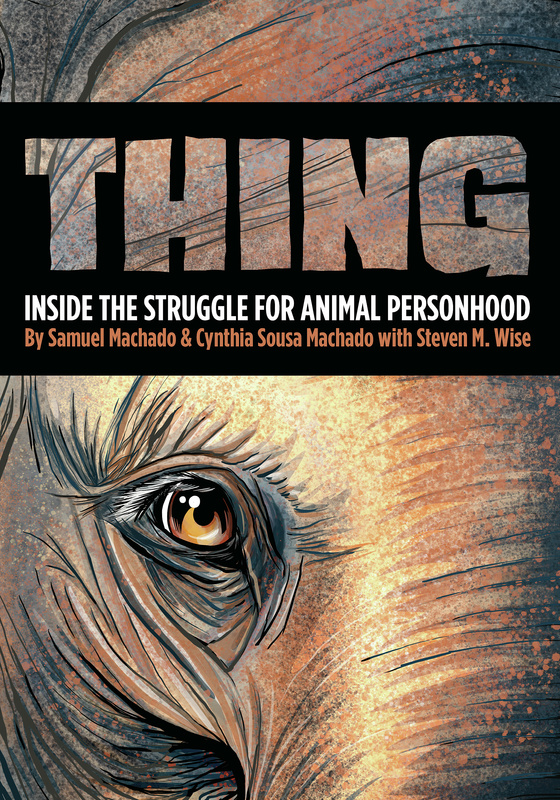
In the third library newsletter of 2023, the Foundation for Animals in Law (TIR) once again presents selected new additions. Books, articles and films on animal-related topics are presented. The current issue focuses on the book "Thing: Inside the Struggle for Animal Personhood", which takes an unconventional approach to highlighting efforts to recognise the fundamental rights of non-human animals.
November 17, 2023
Humans (Homo sapiens) occupy a special position compared to animals in terms of their mental abilities, as we learn from the compact encyclopaedia of biology, defining the term human. Our social behaviour and physical characteristics indicate that primates and humans have the same ancestors and that we are biologically an animal species. It is obvious that there are differences between humans and animals. In many respects, however, they show more similarities than scientists have for a long time assumed. In the field of law, animals are not considered to have legally enforceable rights and obligations. They remain assets that can be owned. In most countries, non-human animals are considered "things" before the law, which means that they do not even have the status of an individual.
In the book "Thing: Inside the Struggle for Animal Personhood", the legal and scientific arguments in favour of the personal rights of animals are presented in the form of a graphic novel drawn by the renowned comic artists Cynthia Sousa Machado and Sam Machado. Animals should have basic rights like humans, based on freedom, autonomy, equality and fairness, and should no longer be considered the property of humans. Under the leadership of attorney Steven M. Wise and with the support of some of the world's most respected scientists in animal behaviour and cognition, the Nonhuman Rights Project (NhRP) has been representing nonhuman animals in court since 2013. Steven M. Wise is the author of this book and an American legal scholar, founder and president of the NhRP organisation. He specialises in animal welfare law, primatology and animal intelligence, and has taught animal welfare law in the United States for 30 years. The NhRP argues that non-human animals should be entitled to rights that can be granted according to their species. The courts should take into account the claims of the animal according to the current state of knowledge and depending on the species, and pass judgement accordingly.
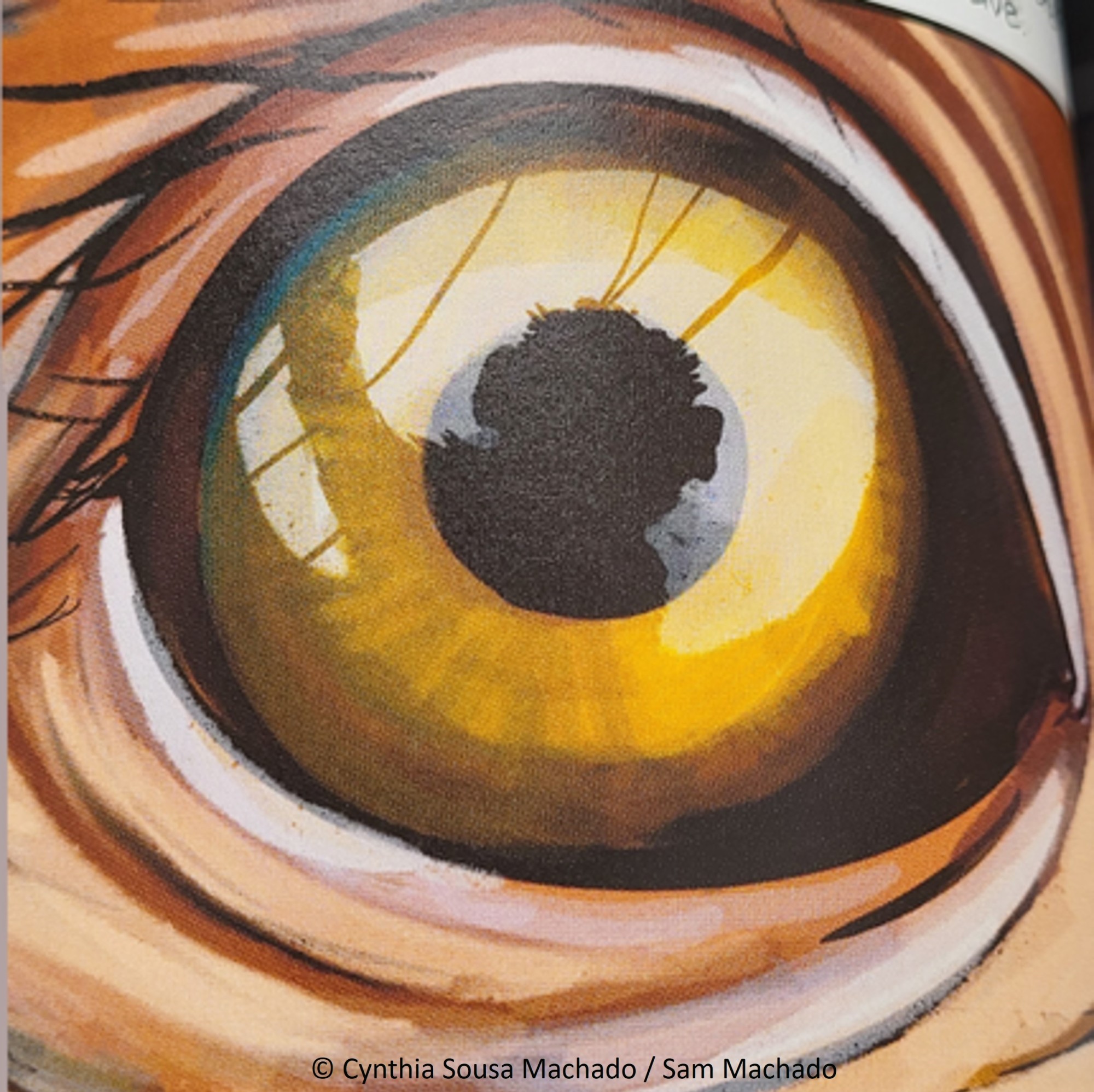
The book documents the moving case of Happy, a female elephant who has lived in New York's Bronx Zoo for 45 years. Like all elephants, Happy has a complex mind and is a highly social animal with a sense of self-knowledge and a need to make her own decisions. However, like all non-human animals, Happy is considered a "thing" in the eyes of the law and has no basic rights. The book contains illustrations of courtroom scenes depicting the work of the Nonhuman Rights Project representatives. It shows how they represent Happy's cause and argue in favour of the elephant's "physical freedom" under the legal doctrine of habeas corpus. Admission to a sanctuary would be an ideal solution to improve their welfare and ensure a relatively species-appropriate life under the given circumstances.
The Nonhuman Rights Project had a major success in a court case involving the two chimpanzees Hercules and Leo, who had been kept as laboratory animals. The NhRP's lawyers were able to convince the courts that the cognitive abilities of the chimpanzees should be taken into account and that the animals should be afforded certain personal rights, in particular the right to autonomy and welfare. This case has attracted worldwide attention and opened the door for similar cases on the international stage. Thanks to the great commitment of the NhRP organisation's lawyers, the chimpanzees found a place to live in a protected area in Georgia (USA) in 2018, where they were able to experience fresh air for the first time.
The object status of animals has been abolished in Switzerland since 2003. Animals are recognized as sentient beings capable of suffering. However, this does not place them on the same level as humans, and they are still not subject to legally enforceable rights and obligations. Animals remain assets that can be owned. For this reason, the German Criminal Code (StGB), for example, still refers to an injured or killed animal as damage to property. Nevertheless, the separation of animals from the status of property has led to adjustments in various areas of law. Incidentally, the principle that animals are no longer property applies to all living animals. This therefore goes far beyond the Animal Welfare Act which, with a few exceptions, only protects vertebrates.
Today, human superiority is mainly evident in the exploitation of farm, sport, domestic, wild and laboratory animals on a daily basis and worldwide. Instead of caring for our vulnerable environment, we keep, breed and domesticate animals solely for our own needs, be it for food, clothing, sport or entertainment. As a rule, we do not recognise them as individuals with personal rights. "Thing: Inside the Struggle for Animal Personhood" is a touching portrait of a group of people's fight for the rights of non-human animals and their detachment from their material status. Recognizing such rights in our legal system is possible and is a matter of urgency, but the political will is needed to ensure fair conditions for all living beings.
The work "Thing: Inside the Struggle for Animal Personhood" is commercially available and can also be viewed by appointment during opening hours in the TIR library, where reading and workstations are available. Current new additions to the TIR library are presented in the TIR library newsletter (link).
Further information
- Book: Thing: Inside the Struggle for Animal Personhood by Samuel Machado, Cynthia Sousa Machado und Steven M. Wise
- Nonhuman Rights Project (NhRP)
- Book: Drawing the Line - Science and the Case for Animal Rights by Steven M. Wise
- Book: Unlocking the Cage - Science and the Case for Animal Rights by Steven M. Wise
- Book: Rattling the Cage - Toward Legal Rights for Animals by Steven M. Wise
- Article (in German): Primaten als Grundrechtsträger: Überlegungen zum ersten bundesgerichtlichen Tierrechtsurteil by Charlotte Blattner und Raffael Fasel
- Webnews (in German): TIR über die Ablehnung der Initiative Grundrechte für Primaten
- Article (in German): Elefanten erkennen sich im Spiegel
- Documentation (in German): Wie Elefanten denken: der Spiegel-Test
- All issues TIR library newsletter