Swiss animal welfare law: not as good as Swiss chocolate
Switzerland likes to claim that it has one of the strictest animal welfare laws. However, a closer look reveals that even in this country, certain forms of husbandry and practices are still permitted in the treatment of animals that significantly restrict their welfare and dignity. In order to use animals intensively, their suffering is consciously accepted and legitimised with the help of legal provisions. The current animal welfare regulations only define minimum standards, the adherence to which does not guarantee a species-appropriate or stress-free life for the affected animals. But there is also an urgent need for action with regard to the enforcement of animal welfare legislation by the competent veterinary and police authorities, public prosecutors and courts: The suffering of animals is systematically trivialised, animal welfare violations are tolerated for too long and cruelty to animals is not punished severely enough.
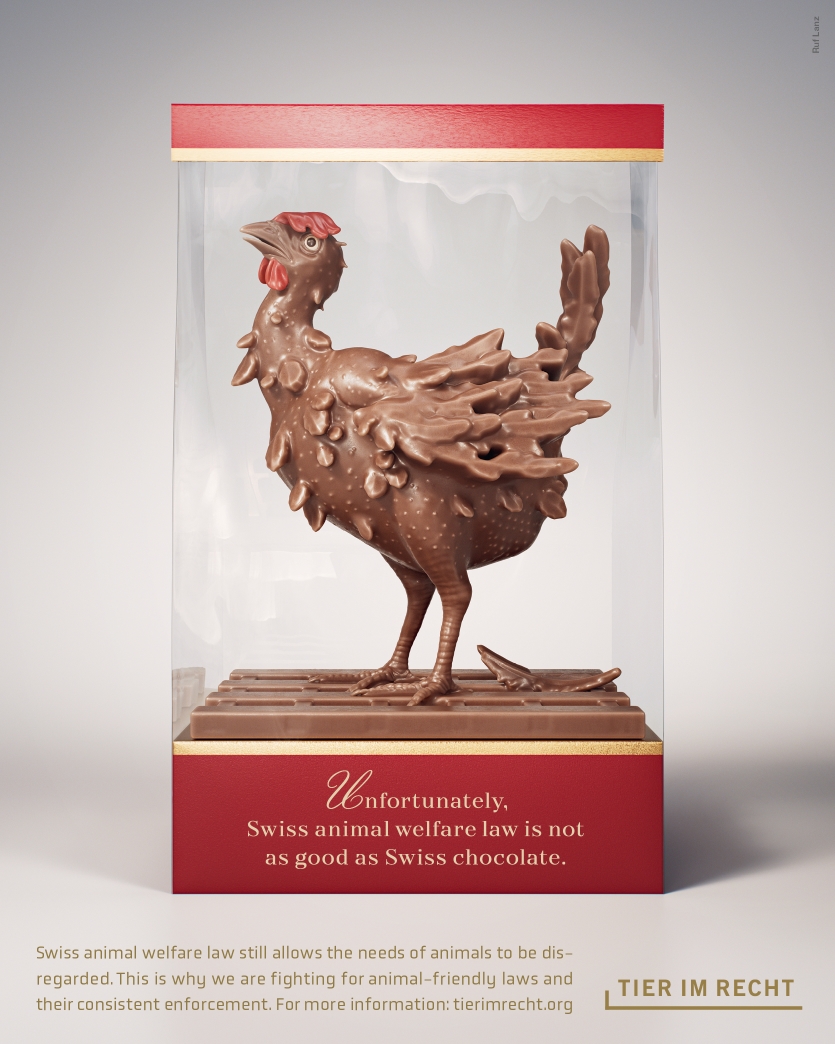
Chicken
Current animal welfare regulations still legitimise far-reaching restrictions on the needs of animals, for example with regard to their freedom of movement, their social life, their feeding or the design of their accommodation. For example, cattle may be tethered for up to 275 days a year and for up to two weeks at a time, and sows may be kept in narrow crates for up to ten days. Under animal welfare legislation, pigs, chickens and rabbits are not allowed to roam and pigeons are not allowed to fly freely. The constant provision of water is not mandatory for all animals and the Animal Welfare Ordinance only stipulates a minimum area of three square metres for a fattening cow weighing 450 kilograms.
Factory farming is a reality in Switzerland and is legally permissible. This can be seen, for example, in the poultry industry: the vast majority of the more than 13 million chickens kept in Switzerland live in sheds together with several thousand animals. For example, up to the 28th day of fattening, the keeping of up to 27,000 broilers is permitted. From the 43rd day of fattening, a maximum stock of up to 18,000 animals is permitted. High-performance breeding and the conditions under which chickens are kept indicate that many broilers suffer painful joint damage as well as ulcers and inflammation of the feet. According to the poultry industry, up to four per cent of animals die before slaughter. In addition, almost all laying hens suffer bone fractures as a result of calcium deficiency and often develop inflammation of the fallopian tubes.
As part of egg production in Switzerland, around 3.5 million male chicks are gassed every year on their first day of life as "industrial waste", as they do not lay eggs and are therefore "worthless" to producers. As the animals, which are unilaterally orientated towards maximum laying performance, only produce little meat, they are also of no interest for fattening. This highly questionable approach to egg production clearly contradicts the principle of protecting animal dignity enshrined in the Federal Constitution and the Animal Welfare Act. By killing the chicks as an unwanted by-product, their intrinsic value is completely disregarded. Nevertheless, the practice is authorised by the Animal Welfare Ordinance.
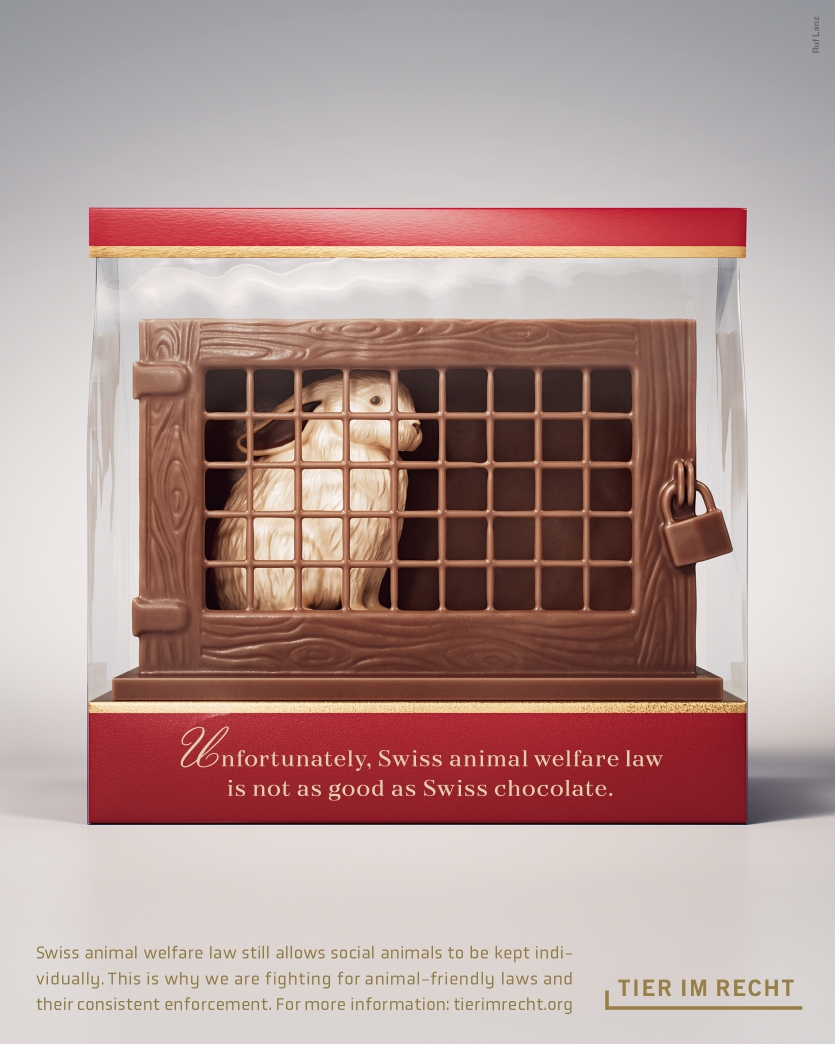
Rabbit
Numerous animal species live in the wild in families, herds or flocks. According to Swiss animal welfare legislation, animals that are kept in human care are entitled to have their natural behaviour undisturbed and their adaptability not overtaxed. Natural behaviour requires, among other things, that animals that naturally live in social groups are allowed appropriate contact with conspecifics. Living together with conspecifics and the associated fulfilment of social needs are elementary factors to ensure the welfare of the animals concerned.
How social contact is to be organised in concrete terms is specified individually for each animal species in the Animal Welfare Ordinance. This shows that the principle of the Animal Welfare Act, according to which animals should have the opportunity to fulfil their social needs, is largely ignored on the basis of economic interests. Sheep, goats or horses, for example, may be kept individually on a permanent basis, provided that they are allowed visual or visual, auditory and olfactory contact with other members of their species. It is also legally permitted to keep calves individually in so-called calf igloos, provided they have visual contact with other animals of the same species. It is also still permitted to keep rabbits older than eight weeks on their own. They only need to be able to smell and hear other rabbits. Keeping social animals individually all the time means considerable suffering for them and violates the guiding principles of the Swiss Animal Welfare Act, according to which the welfare and dignity of animals must be protected.
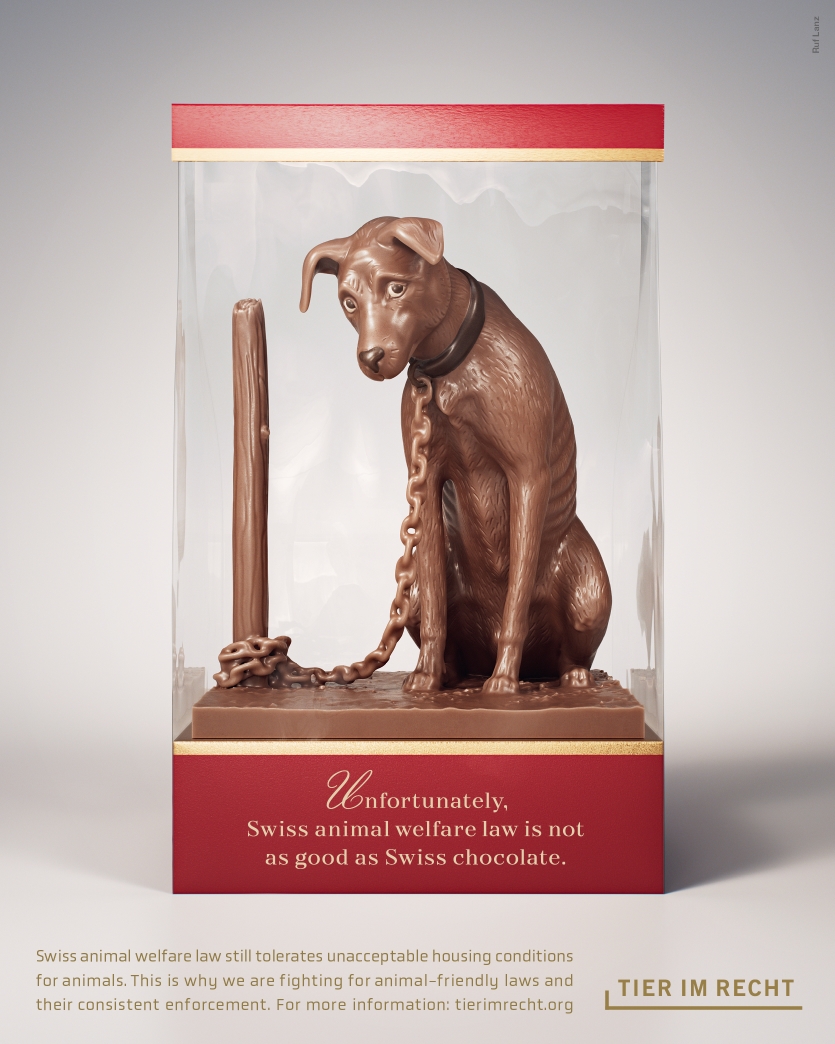
Dog
The cantons and the cantonal veterinary authorities are responsible for implementing animal welfare legislation. They must ensure that the provisions are applied in accordance with their wording. In the event of violations, the veterinary authorities must restore the animal welfare-compliant situation and take the necessary measures to ensure the welfare of the animals concerned. However, an analysis of animal welfare enforcement shows that the authorities often fail to apply their administrative instruments adequately or at all in practice. For example, there is a tendency throughout Switzerland for administrative authorities to trivialise animal welfare violations and only take measures once the threshold for cruelty to animals has already been crossed. Time and again, cases of inadequate animal husbandry come to the public's attention in which the authorities have been aware of the abuses for years but have not taken any consistent measures - such as confiscating animals or imposing a ban on keeping animals.
Of course, the veterinary authorities must always observe the principle of proportionality, but with a clear mandate to protect the animals. In practice, however, when assessing proportionality, the (economic) interests of the offending animal keeper are often weighted more heavily than the suffering of the animals concerned. However, there is no legal right to keep animals. Animal welfare law is not intended to make it possible to keep animals at any price; rather, the protective provisions only serve to authorise such keeping if animal welfare is ensured.
The veterinary authorities often trivialise shortcomings in animal husbandry that affect the medical care of the animals or their feeding, care or employment opportunities, even though experience shows that animal husbandry that is frequently subjected to complaint, has a high potential for escalation. Although the veterinary authorities are obliged to file criminal charges in the event of a punishable offence, they often do not report serious animal welfare violations directly, as practice shows. Instead, the animal keepers are sometimes warned repeatedly by order and the offences against the Animal Welfare Act are only reported to the prosecution authorities if they are repeated several times.
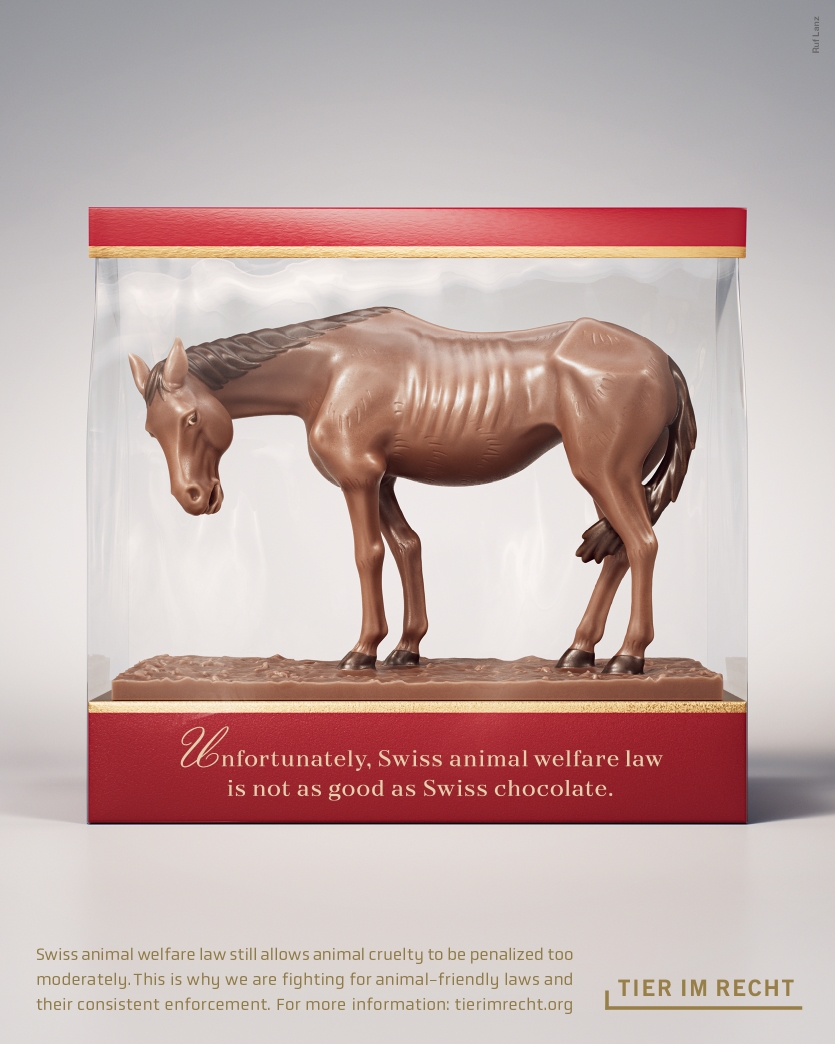
Horse
In the area of animal welfare law, a consistent implementation of the provisions is important on the one hand in order to directly help animals affected by animal welfare offences and to reduce further suffering. On the other hand, it is also important to punish animal welfare offences under criminal law in order to deter potential animal abusers and prevent further animal welfare offences in this way. However, the criminal assessment of animal welfare offences by the competent authorities and courts is still inadequate in many areas. For example, public prosecutors and courts tend to take insufficient account of the interests of animals worthy of protection in criminal animal protection proceedings and to trivialise animal suffering. This is reflected on the one hand by the fact that in practice, animal welfare offences are often classified as infringements - which only result in a fine - and not as cruelty to animals - which are punishable with a fine or a prison sentence of up to three years - even if the animals have suffered considerably in the specific case. From the point of view of animal welfare, such misjudgements are all the more precarious as veterinary authorities regularly only issue a ban on keeping animals if there is a conviction for an animal cruelty offence - although this is not a mandatory requirement. In addition, the criminal prosecution authorities do not exhaust the statutory penalties by far. An unconditional prison sentence for a pure animal welfare offence is very rarely imposed. These shortcomings indicate a lack of sensitivity and expertise on the part of the prosecuting authorities and courts in the area of criminal law on animal protection.
The TIR also assumes that a high number of unprosecuted animal welfare offences go unreported. The keeping and utilisation of animals and their use in animal experiments and for sports or service purposes is often associated with an increased potential risk to the welfare of the animals concerned. In view of the fact that many millions of animals are kept and used in this country, the number of criminal proceedings concluded is very low at just under 2,000 per year. The TIR therefore assumes that many animal welfare offences are not even discovered or are not taken seriously by the competent authorities.
Expertise and commitment TIR
In the area of animal protection enforcement under criminal law, the TIR maintains a database that includes all Swiss criminal judgements in the area of animal protection law reported to the Federal Food Safety and Veterinary Office (FSVO) and serves as an important enforcement aid for the authorities. It also operates a free legal information service, through which it receives numerous reports of inadequate animal welfare enforcement. As an independent organisation that works together with authorities, interest groups and professional associations at federal and cantonal level, TIR has the necessary expertise to assess control systems and deficiencies in the implementation of animal welfare legislation thanks to its experience and broad insight into animal welfare enforcement at various levels. The TIR is therefore regularly consulted by public and private institutions as a specialist centre for analysing animal welfare legislation and animal welfare enforcement.