TIR attends 18th CITES Conference of the Parties in Geneva
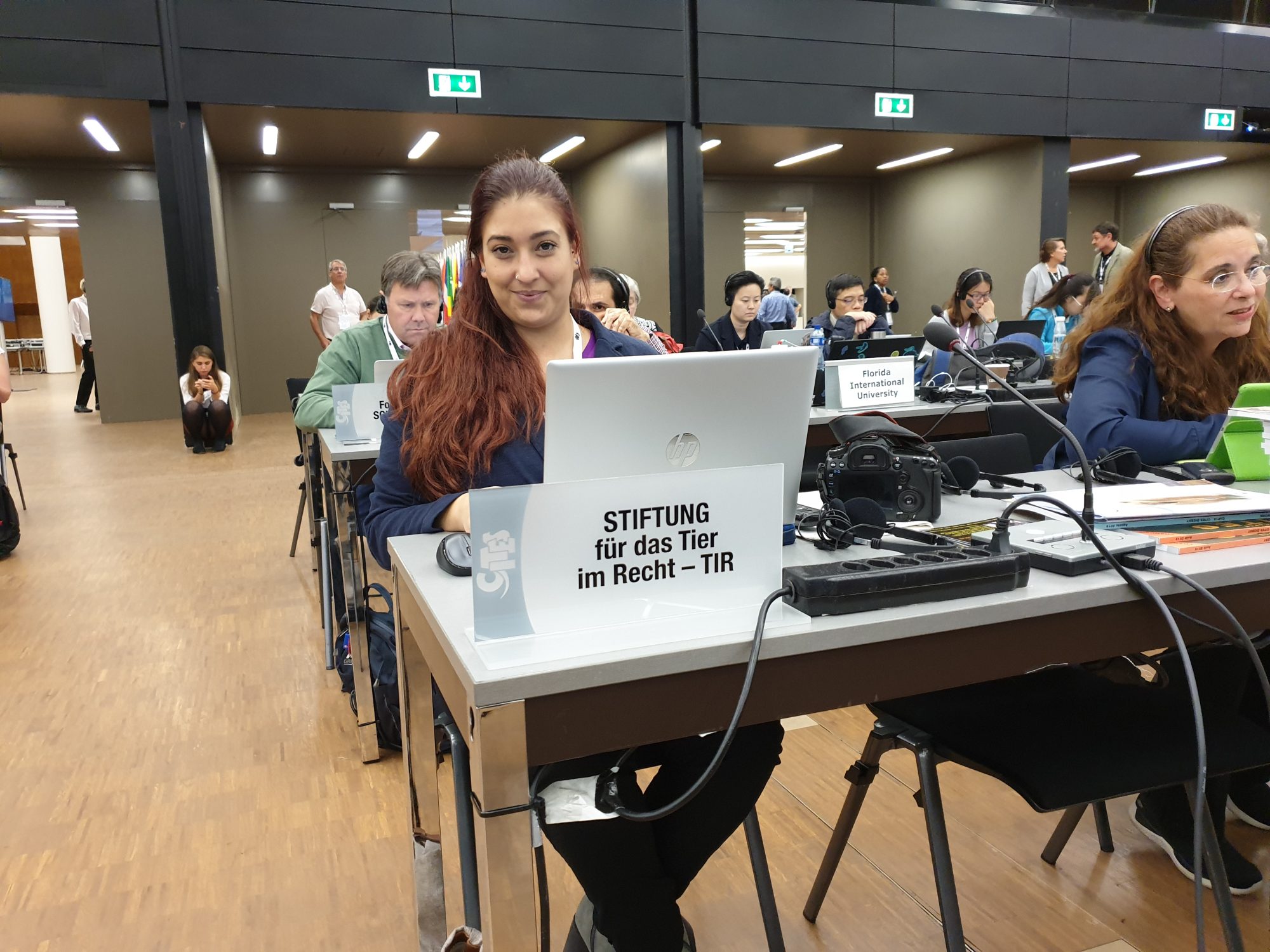
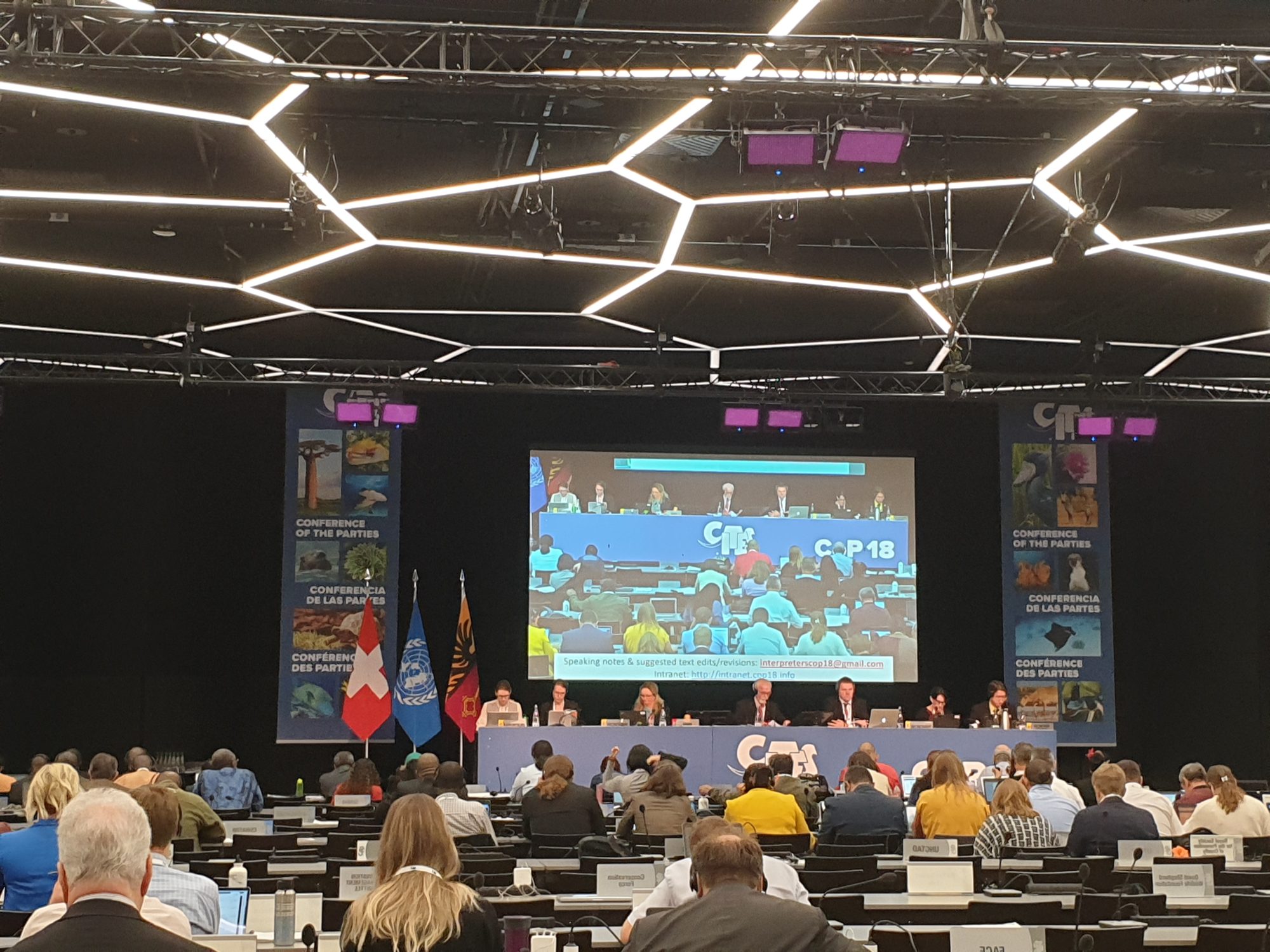
From August 17 to August 28, 2019, the 18th CITES Conference of the Parties was held in Geneva. For twelve days the Parties discussed the implementation and amendment of the Convention. Overall, TIR offers a positive summary of the conference: for many species already listed in CITES the protection has been increased, other species - such as giraffes - have been added to the CITES Appendices.
September 2, 2019
CITES Convention on International Trade in Endangered Species of Wild Fauna and Flora) is an international convention aimed at controlling cross-border trade in endangered plant and animal species and preventing their over-exploitation. It was signed in Washington in 1973 and ratified by Switzerland – as one of the first member states – in 1975. The original document is deposited in Switzerland and the CITES Secretariat is located in Geneva. To date, 183 countries have signed the agreement, which protects a total of around 5,800 animal species and 30,000 plant species. These species are grouped into three categories according to their vulnerability (Appendices I-III). Depending on their classification, the international trade in these species is either prohibited or subject to authorization.
The CITES Conference of the Parties (CoP) is held every two to three years to review the implementation of the Convention. The Parties may review progress in the conservation of the species listed in the Appendices, evaluate (and, where appropriate, adopt) proposals to amend the lists of species in Appendices I and II, consider working documents and reports from the Parties, the Standing Committee, the Secretariat and working groups, and make recommendations for action to improve the effectiveness of the Convention. In addition, the Parties may make provisions that are necessary for the Secretariat to function effectively.
At this year's conference, around 101 working documents and 56 proposals to amend Appendices I and II were on the agenda (the full program of the conference can be found here). Many proposals to include animal species in the CITES Appendices or to strengthen the protective status of species were accepted, some even by consensus (i.e. without the need for a vote). From an animal and species protection point of view, this is a great success. For example, the signatory states decided to add giraffes to Appendix II and thus place the animals under the provisions of CITES for the first time. This means that it is now possible to monitor trade in giraffes more closely. The following species are now also covered by the CITES scope of application or have had their protection status strengthened: Asian small-clawed and smooth-coated otters, mako sharks, guitar- and wedgefish, as well as three species of teatfish. Unfortunately, Costa Rica's proposal to include glass frogs in Appendix II failed to achieve the necessary two-thirds majority.
Moreover, various proposals concerning the protection status of African elephants were dealt with. Two proposals called for an easing and one proposal called for a strengthening of the protection of certain populations of African elephants.
The discussion around the proposals highlighted the different views of the Parties on the extent of use of these animals and on trade in ivory. The southern African countries, in particular, advocated the sustainable use of natural resources with the aim of investing the resulting profits in species conservation programs. The more northern African countries warned against reigniting demand for ivory and strengthening the market for elephant products. Accordingly, they advocated a cautious strategy aimed at protecting elephant populations and closing domestic ivory markets. All three proposals were ultimately rejected by the Parties. Thus, the current level of protection of African elephants remains unchanged, which can be regarded as a success in view of the considerable divergences among the Parties. It was equally pleasing that the signatory states decided to allow the export of African elephants captured in the wild for in-situ species conservation projects only, with reservations for strictly exceptional cases. To TIR's great relief, the proposals to relax the protection of rhinoceroses or to facilitate trade in rhino horns by the proponents was also rejected by the Parties.
Other proposals were adopted directly by consensus without the need for a vote; for example, the proposals on the Reeve's pheasant, the Black crowned-crane and many different reptile species (such as various lizards, turtles, newts, one species of snake and one species of iguana) for listing in CITES Appendix I or II. The protection of some invertebrates such as ornamental spiders and two species of butterflies was also accepted by consensus. Many of these species are threatened by the international pet trade. Their new or more stringent protection status is therefore of great importance. For species that are newly protected under CITES, reliable trade data in the countries of origin can now be collected and the necessary measures proposed. For species that have been upgraded to Appendix I, all trade for commercial purposes is henceforth banned.
TIR has been dealing with the issues of poaching and trade in live animals, hunting trophies and illegally purchased animal products such as ivory and rhino horn since 2015. Tackling the immense animal welfare and species conservation problem requires not only legal know-how but also good networking and a constant exchange of information. This is TIR's first time at the CITES Conference of the Parties and it intends to continue following the work of the CITES bodies closely. With the help of CITES, the worldwide trade in endangered species and products thereof can be reduced significantly. This can only be achieved if the CITES provisions are effectively applied and consistently enforced.
Weitere Informationen:
- TIR Information Flyer No. 46 (currently only available in German)
- TIR Information Flyer No. 41 (currently only available in German)
- News Release of October 9, 2018: TIR attends meeting of CITES Standing Committee in Sochi, Russia
- News Release of February 23, 2018: Stop trade with wildlife and wildlife products (currently only available in German)