Newsletter TIR Library: TIR presents reading tip of the month
With this year's third issue of the newsletter, the library of the Stiftung Tier im Recht (TIR; Foundation for the Animal in the Law) presents selected and current new additions. We take a closer look at books, articles and film contributions on animal-relevant topics. This month's tip is about traditions of human eating behavior, their evolutionary significance, the biospheric effects of meat consumption, and the question of whether a meat-free diet could be the future.
October 19, 2020
The production of meat consumes tremendous amounts of resources. Water, energy and grain consumption is huge, and the consequences for the climate and environment are enormous. Moreover, countless animals suffer in the factory farming industry. In addition to the animals, low-wage workers are also exploited in animal factories and slaughterhouses.
Despite the ever-present role models of celebrity vegans, the continuously increasing offer of plant-based foods, and scientific reporting on a healthy diet without meat, demand for meat is expected to grow twice as fast as demand for plant-based food over the next thirty years. Between 1960 and 2010, the meat consumption per capita more than doubled in developing countries; in China, meat consumption increased ninefold. By 2050, the Food and Agriculture Organization of the United Nations FAO expects meat production to increase to 455 million tons.
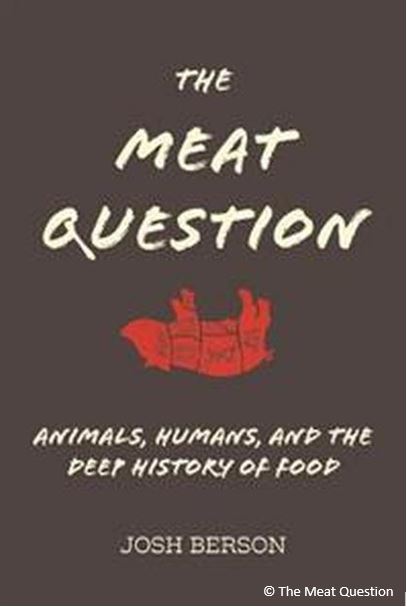
The urgently needed change in human diet will therefore not happen by itself. The book "The Meat Question" by Josh Berson gives insights into human eating behavior and meat consumption. Based on paleontological as well as anthropological research results, Josh Berson shows our deeply rooted eating traditions and the evolutionary significance of our interaction with meat.
Furthermore, the author describes how today's increase in demand for meat is driven as much by economic insecurity as it is by wealth. Meat consumption is often associated with wealth and health, but this already contains two contradictions: firstly, the offer of cheap meat is omnipresent, and secondly, animal health is maintained in factory farming with antibiotics. In addition, the animals are kept in poor conditions. A change in thinking starts with one's own person and is often uncomfortable. However, it is worth to take a critical look behind the scenes in order to question one's own automatisms and be able to change them.
Berson says, that to answer the meat question, we need to think about meat consumption in ways that go beyond paleo diets and protests from some animal rights organizations. We need to look at the deeply entangled economic and political lives of humans and animals in the past, present and future.
The book "The Meat Question" is available in stores and, moreover, can be viewed by appointment during open hours at the TIR library. Reading and work stations are available. Recent additions to the TIR Library are featured in the TIR Library newsletter.
Further information
- Book "The Meat Question" by Josh Berson
- Recent additions to the TIR library: TIR Library newsletter
- Library Database
- Book recommendation: "Sollten wir alle vegan leben? Grosse Fragen des 21. Jahrhunderts" by Molly Watson
- Further book recommendation: "Vegan-Klischee ade! - Wissenschaftliche Antworten auf kritische Fragen zu veganer Ernährung" by Nico Rittenau
- Magazin recommendation: "Veganmagazin"