TIR Library Newsletter: Selected Reading Tip
With its second library newsletter of the year, the Stiftung für das Tier im Recht (Foundation for the Animal in the Law; TIR) once again presents selected new additions to its library, including books, articles, and films on animal-related topics. The current issue focuses on the history of milk, the bright and dark sides of dairy farming, and Europe's dairy industry.
June 6, 2022
Cows with intact horns on lush green pastures - this image still appears on milk cartons or in commercials, fooling trusting consumers into believing that dairy cows live a happy life. For decades, milk has been touted as a healthy and natural food essential to our well-being. The Organization of Swiss Milk Producers (SMP) claims on its websit www.swissmilk.ch that nutrients in milk, like calcium, protein, and milk fat, are essential for the health of humans of all ages. But what does this mean for the life of a mother cow, when humans lay claim to the milk meant for her calf, and what are the consequences of industrial dairy farming for our environment?
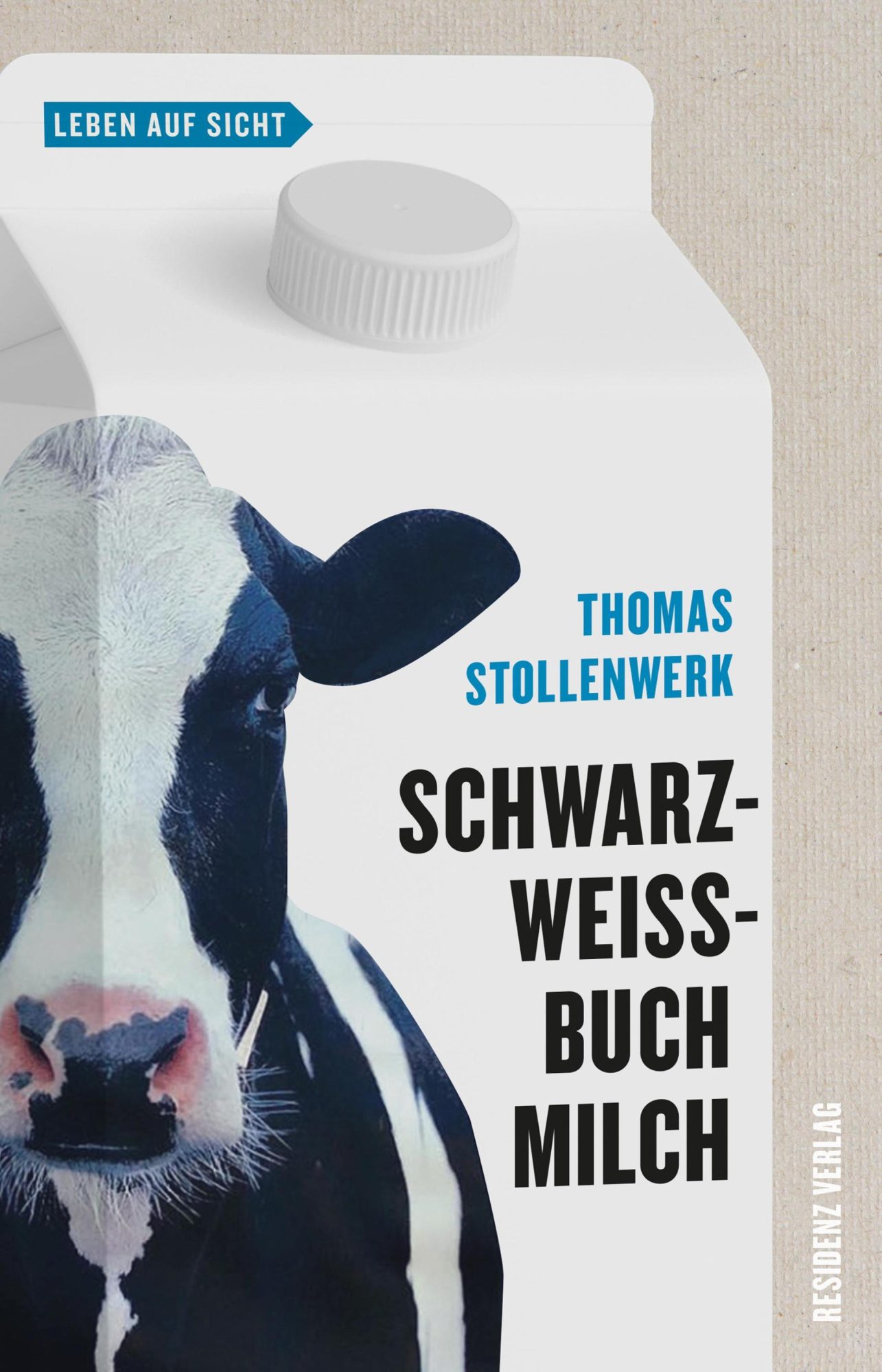
The work presented here, "Schwarzweissbuch Milch - Die Neuerfindung eines Naturprodukts - zwischen Mythos und Wahrheit (Black and white book on milk - the reinvention of a natural product - between myth and truth)", shows the history of milk and the bright and dark sides of the dairy industry. Author Thomas Stollenwerk gets to the bottom of things without painting a black and white picture. The book begins by describing how milk became an integral part of our Western diet and how dairy marketing is organized around the world. The enormous growth of the milk market also changed how animals are reared - with devastating consequences for the animals involved.
As a result of the highly mechanized industry, cows have become milking machines. Mass production in ever larger herds has made the individual invisible and the animals have become expendable commodities. The successful European dairy lobby, like all other industries, focuses on maximizing profits and therefore on maximum milk production, with no regard for the animals or the environment. The farmers also suffer from this relentless industrialization, as they are no longer able to cope with its demands. Thomas Stollwerk's book offers a nuanced insight into this problem.
Selective breeding has turned dairy cows into high-performance machines with a milk yield that has far exceeded the quantity needed to feed their calves. Regular milking of cows and artificial insemination help to ensure that dairy cows produce milk almost all year round. This, in turn, has increased their risk of developing diseases, like udder infections. The author compares the performance of today's cows with that of top athletes. The book also addresses the problem of importing concentrated feed, which promotes growing monocultures for cultivating feed and in turn threatens biodiversity. The book also explains the connection between the manure lakes caused by mass cattle farming and groundwater contamination.
A natural, species-appropriate and animal-friendly life is virtually impossible in industrial dairy cattle production. Husbandry systems that take animal welfare into account to a certain degree do exist, but they play a minor role due to low profitability. Even in Switzerland, more than 40 percent of all cows are kept tethered all year round, and some older stalls are still equipped with electric rods that hang above the cows’ backs and force them to take a step back when urinating (so as not to soil their confined living area).
According to the Swiss Animal Welfare Ordinance, cows are only granted 90 out of 365 days to move freely for two hours or a little more at a time. Almost 60 percent of Swiss cows live in barns that allow them to roam freely, which gives them a little more freedom of movement, but can also be highly stressful for them due to a lack of escape options in closed barns. As a result of the confinement, the animals are often dehorned, even on organic farms. Although more than 85 percent of all dairy cows in Switzerland (2020: 86.9 percent according to the Agricultural Report of 2021) are kept under the conditions of the animal welfare program "RAUS", which requires the animal be granted regular access to outdoor areas, these areas are not necessarily lush green fields. A solid outdoor run with a concrete floor is sufficient to qualify for the subsidies for this "animal welfare service". Another little-known fact is that mother cows and calves are separated shortly after birth. Cows give birth to their calf after nine months of pregnancy – just like humans. When mother cow and calf are allowed to remain together, they usually develop a lifelong bond.
Thomas Stollenwerk's book also addresses the health risks resulting from increased consumption of milk and dairy products. In 2005, a scientific article caused a stir in the dermatological community after researchers at Harvard University described a possible link between the consumption of milk and acne among teenagers. Even though the link has not yet been conclusively determined, dermatologist Prof. Bodo Melnik, MD, is convinced that milk plays a far greater role than previously assumed in triggering a number of diseases. According to Prof. Melnik, milk is a secretion which, in the context of mammalian evolution, has the function, on the one hand, to nourish and, on the other, to ensure postnatal growth. Its amino acids send growth signals. When growth factors like insulin, amino acids, and cellular energy come together, a cell can divide and multiply. Each glass of milk provides an insulin kick for about an hour and a half and can increase the risk of developing diabetes, obesity, Alzheimer's disease, dementia, or cancer.
Thomas Stollenwerk studied political science and has been working as a journalist since 2013. His research focuses on the manifold social, ecological, and economic aspects of sustainability. In 2015, he became editor-in-chief of the magazine Biorama.
His work "Schwarzweissbuch Milch - Die Neuerfindung eines Naturprodukts - zwischen Mythos und Wahrheit" (Black and white book on milk - the reinvention of a natural product - between myth and truth) is available in stores and can also be viewed upon appointment during opening hours at the TIR library, where reading and workstations are available. Recent additions to the TIR Library are featured in the TIR Library newsletter.
More information
- Book: "Schwarzweissbuch Milch – Die Neuerfindung eines Naturprodukts – zwischen Mythos und Wahrheit" by Thomas Stollenwerk (in German)
- Horn Cow Initiative
- Stury: "Dairy, Soy, and Risk of Breast Cancer: Those Cofounded Milks" von Gary E. Fraser et al.
- New additions to the TIR library: Newsletter TIR library