TIR Library Newsletter: Our Book Recommendation
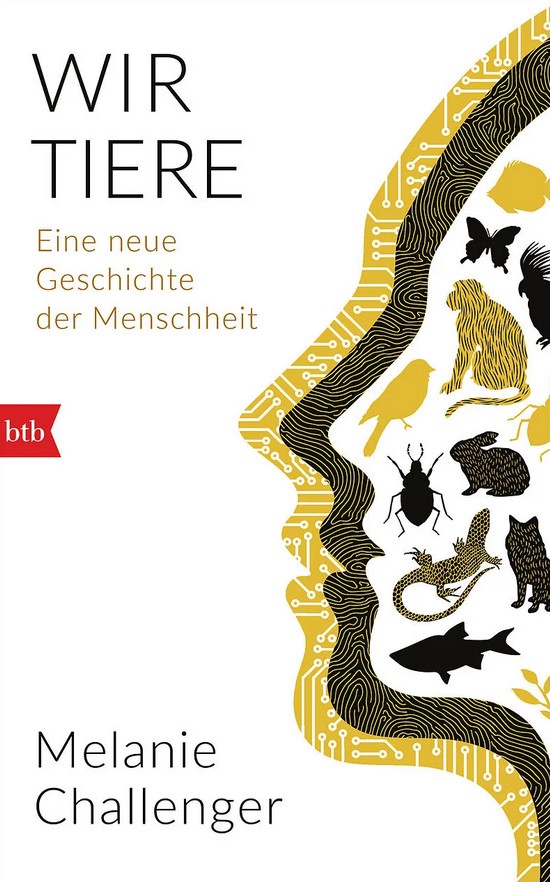
In its fourth library newsletter of 2024, the Foundation for the Animal in the Law (TIR) again presents selected new additions, such as books, articles and films on animal-related topics. The current issue focuses on the publication ‘We Animals - A New History of Humanity’, which provides a fascinating insight into the lives of the most resourceful, aggressive and at the same time most contradictory animals, namely humans.
December 20, 2024
We humans like to differentiate ourselves from animals, even though we have a lot in common with them and are animals ourselves, in some respect. We are at odds with being on the same level as a pig or a monkey, for example. However, we like to adorn ourselves with attributes of other creatures that enhance our human abilities, but which we ultimately cannot achieve; for example, the visual acuity of an eagle or the speed of a cheetah. The numerous astounding characteristics of the natural and animal world have also inspired mankind to create ground-breaking inventions. For instance, the way mosquitoes bite, served as an idea for microneedles, dolphins and bats led to the invention of sonar and the burdock plant genus inspired Velcro fasteners. Researchers, designers and engineers are also increasingly looking to nature and non-human creatures (known as bionics) for inspiration in the field of sustainability.
This book by author Melanie Challenger brings us closer to being human and illustrates who we are and how we relate to animals and why we often deny our own animal nature. Melanie Challenger explains our ways of thinking and our behaviour towards non-human creatures on the basis of biological, philosophical and natural-historical findings. The concept of hierarchy, according to which humans are at the top, and the terms ‘higher’ and ‘lower’ species are still in use today. The author also explains how domestication changed the relationship between humans and animals. It led to a new perception of humans towards other living beings. Wild animals, that once inspired awe, became objects of status. They were classified as ‘lower’ beings and as soon as they were used in any way by humans, be it for meat, wool or as pack animals, it was no longer important to empathise with them. Since then, we have regarded our intelligence or behaviour as the more valuable and even denied many animals consciousness altogether.
Humans are extraordinary, there is no doubt about that, especially when you consider the technological achievements of recent decades. However, much of this has also had disastrous consequences, which has led to our ecological imbalance.
There is always new evidence that animals have feelings and intentions. It must not be forgotten that animals are indispensable for the continued existence of planet Earth's ecology. Unfortunately, though, humans do not like to deviate from their ideas, especially when it comes to decide which way of thinking is more valuable. It does not matter that other creatures don't think like us or only act according to their instincts. It is therefore also questionable if it makes sense to speculate whether an animal acts instinctively or on the basis of a dynamic intelligence. In any case, it remains most astonishing how an animal solves problems or obstacles or shows grief at the loss of a close family member - all these behaviours are very similar to those of humans. What distinguishes us from animals is first and foremost our tendency to move in the wrong direction, be it in our dealings with animals, the environment or our fellow human beings. This book encourages us to think about the similarities between humans and other living beings rather than the differences. Perhaps there is room for humans and animals at the top of the hierarchy?
Melanie Challenger studied literature and linguistics at Oxford University. Her first book ‘On Extinction’ was one of the best non-fiction books of 2012 according to ‘Publisher's Weekly’. The work ‘We Animals - A New History of Humanity’ is available in stores and is also accessible by appointment during opening hours in the TIR library, where reading and workstations are available.
The original English edition was published in 2021 under the title ‘How to be Animal - A New History of What it Means to Be Human’. Current new additions to the TIR Library are presented in the TIR Library newsletter.
Further information (in German):
- Book: Radikales Tierrecht - Zehn Fragen zum Antispeziesismus by Jérôme Segal
- Book: Manifest für die Tiere by Corine Pelluchon
- Article: Übergangsprogramm für die Befreiung der Tiere - Ein Diskussionsbeitrag zur Strategie der Tierbefreiungsbewegung als Teil der revolutionären Linken by Bündnis Marxismus und Tierbefreiung (Hrsg.)